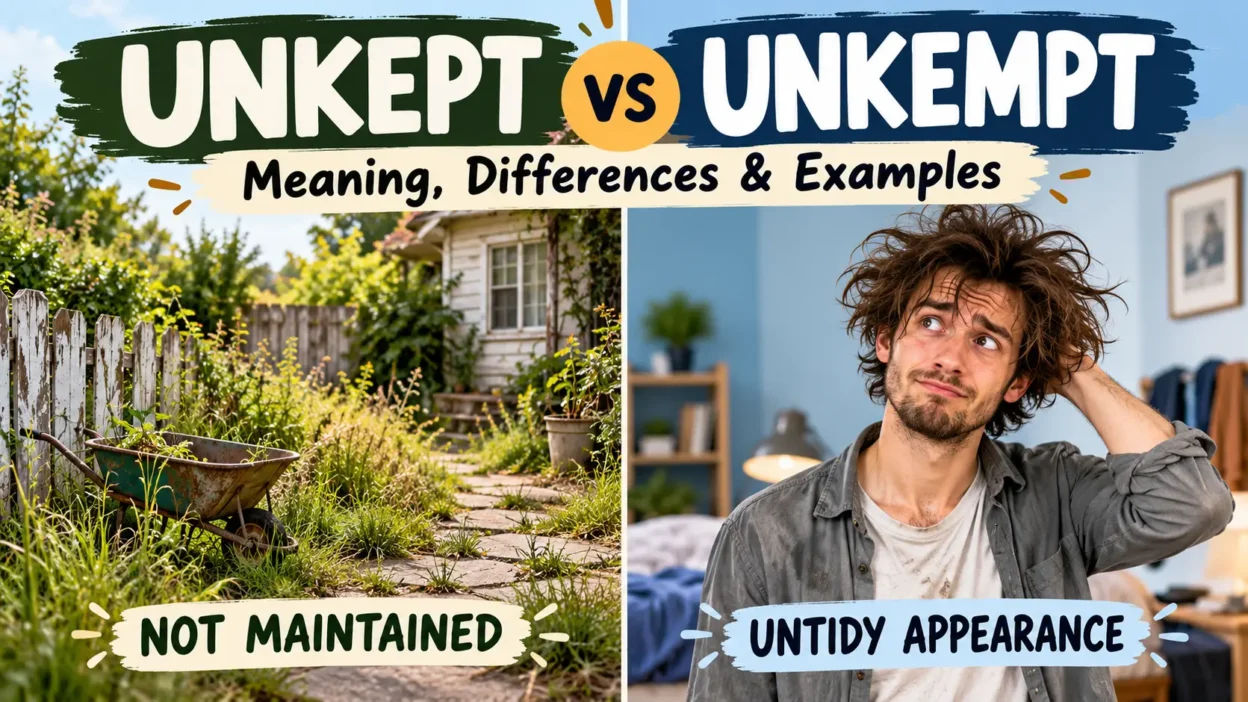
Have you ever wondered whether to use unkept or unkempt in a sentence? Although these words look similar, they have different meanings and uses. Unkept generally describes something that someone has failed to keep, maintain, or fulfill, such as an unkept promise. In contrast, unkempt describes something messy, untidy, or poorly groomed, such as unkempt hair. Understanding this difference helps you avoid common vocabulary mistakes and improve your English writing. In this guide, you will explore their meanings, pronunciations, origins, synonyms, antonyms, and practical examples. You will also learn how to use both words correctly in everyday conversations, professional communication, and academic writing.
📌 Unkept vs Unkempt
Both words exist in standard English, but they serve different purposes.
| Term | Meaning | Usage | Category |
|---|---|---|---|
| Unkept | Not kept, maintained, or fulfilled | Unkept promise | Adjective |
| Unkempt | Messy, untidy, or poorly groomed | Unkempt hair | Adjective |
Easy rule to remember: Use unkept when something has not been kept or fulfilled. Use unkempt when something looks untidy or neglected.
📖 What Does Unkept Mean?
Unkept is an adjective that describes something a person has not kept, maintained, observed, or fulfilled. Writers often use it when discussing promises, commitments, agreements, and obligations.
For example, “She felt disappointed by his unkept promise” means he failed to do what he promised.
People also use unkept to describe neglected places or property, although unkempt or poorly maintained may sound more natural in some contexts.
Pronunciation: /ˌʌnˈkept/
Origin: The word combines the prefix un-, meaning “not,” with kept, the past participle of keep.
Examples of Unkept
- He apologized for his unkept promise.
- The manager addressed several unkept commitments.
- She refused to trust another unkept assurance.
- The owner neglected the unkept property for years.
- They discussed the consequences of an unkept agreement.
Remember that unkept emphasizes something that someone failed to keep, maintain, or fulfill.
✨ What Does Unkempt Mean?
Unkempt is an adjective that describes someone or something that looks untidy, messy, disheveled, or poorly cared for. People commonly use it when discussing hair, beards, clothing, personal appearance, gardens, and lawns.
For example, “He arrived with unkempt hair” means his hair looked messy or poorly groomed.
Unlike unkept, this word focuses mainly on appearance and condition rather than a broken promise or unfulfilled obligation.
Pronunciation: /ʌnˈkempt/
Origin: Unkempt comes from an older English word related to comb. The prefix un- gives it the sense of being uncombed or untidy. Although kempt survives as a rare word meaning neat or well-groomed, most people encounter it in unkempt.
Examples of Unkempt
- His unkempt hair made him look tired.
- She trimmed the unkempt bushes beside her house.
- The traveler wore wrinkled clothes and looked unkempt.
- We cleaned the unkempt garden before the party.
- He brushed his beard to make it look less unkempt.
Use unkempt whenever you want to emphasize a messy appearance or a neglected physical space.
🔍 Key Differences Between Unkept and Unkempt
The main difference lies in what each word describes. Unkept focuses on something a person has failed to keep, fulfill, or maintain. Unkempt focuses on a messy or neglected appearance.
Consider these examples:
- Unkept promise: Someone failed to fulfill a promise.
- Unkempt hair: Someone has messy or poorly groomed hair.
- Unkept commitment: Someone failed to honor a commitment.
- Unkempt lawn: The lawn looks overgrown or untidy.
The words sometimes overlap when people describe neglected property or gardens. However, unkempt emphasizes the untidy appearance, while unkept emphasizes the lack of care or maintenance.
Both spellings work in American and British English. You should choose between them according to meaning, not location.
📝 Unkept vs Unkempt: 10 Example Sentences
These examples show how each word works in a natural sentence.
| Example Sentence | Meaning |
|---|---|
| 1. She regretted making an unkept promise. | She failed to fulfill her promise. |
| 2. His unkempt hair needed a quick brush. | His hair looked messy. |
| 3. The company addressed its unkept commitments. | The company failed to meet its commitments. |
| 4. We cleared the unkempt garden on Saturday. | We cleaned the messy garden. |
| 5. He apologized for his unkept agreement. | He failed to honor the agreement. |
| 6. The actor appeared with an unkempt beard. | His beard looked untidy. |
| 7. She disliked his history of unkept promises. | He repeatedly failed to keep promises. |
| 8. They repaired the neglected house and its unkempt yard. | The yard looked messy and uncared for. |
| 9. The politician faced criticism for unkept pledges. | The politician failed to fulfill pledges. |
| 10. He combed his unkempt hair before the interview. | He tidied his messy hair. |
These examples demonstrate why context matters. A promise can remain unfulfilled, but hair can look messy.
🔄 Synonyms for Unkept and Unkempt
Synonyms help you express the intended meaning more precisely. Choose a synonym that matches the context rather than replacing either word automatically.
| Synonym | Meaning |
|---|---|
| Neglected | Not receiving proper care |
| Unfulfilled | Not completed or achieved |
| Broken | Not honored, as in a promise |
| Unobserved | Not followed or respected |
| Unmaintained | Not properly maintained |
| Unredeemed | Not fulfilled or claimed, depending on context |
| Untidy | Not neat or organized |
| Messy | Disorganized or disorderly |
| Disheveled | Untidy in appearance |
| Uncombed | Not combed or brushed |
| Tousled | Messily arranged, especially hair |
| Scruffy | Untidy or worn in appearance |
| Shaggy | Long, thick, or untidy hair |
| Ungroomed | Not properly groomed |
| Sloppy | Careless or untidy |
| Uncared-for | Lacking proper attention |
| Overgrown | Growing excessively without trimming |
| Disorderly | Lacking order or organization |
Use unfulfilled, broken, or unobserved for promises and obligations. Choose untidy, disheveled, or uncombed when describing appearance.
⚖️ Antonyms of Unkept and Unkempt
Antonyms express the opposite meaning. The best choice depends on whether you are discussing a promise, an obligation, or physical appearance.
| Antonym | Meaning |
|---|---|
| Kept | Maintained or honored |
| Fulfilled | Completed or achieved |
| Honored | Respected or carried out |
| Observed | Followed or obeyed |
| Maintained | Kept in good condition |
| Neat | Orderly and tidy |
| Tidy | Clean and organized |
| Well-groomed | Carefully and neatly presented |
| Well-kept | Properly maintained |
| Immaculate | Extremely clean and neat |
| Organized | Arranged systematically |
| Pristine | Clean and in excellent condition |
For example, a kept promise contrasts with an unkept promise, while neat hair contrasts with unkempt hair.
🚫 Common Mistakes With Unkept vs Unkempt
Many writers confuse these words because their spellings differ by only a few letters. Use the following table to avoid common errors.
| Mistake | Correct Usage |
|---|---|
| He had unkept hair. | He had unkempt hair. |
| She looked unkept at the meeting. | She looked unkempt at the meeting. |
| He made an unkempt promise. | He made an unkept promise. |
| The politician broke an unkempt pledge. | The politician broke an unkept pledge. |
| Her beard looked unkept. | Her beard looked unkempt. |
| He wore an unkempt commitment. | He failed to honor his commitment. |
| The gardener trimmed the unkept-looking hair. | The gardener trimmed the overgrown bushes. |
| She complained about his unkempt promise. | She complained about his unkept promise only if she meant an unfulfilled promise; otherwise, clarify the intended meaning. |
| The man combed his unkept hair. | The man combed his unkempt hair. |
| The employee discussed his unkempt obligation. | The employee discussed his unfulfilled obligation. |
Important: Unkept is not always incorrect. The word has a legitimate meaning, especially in expressions such as unkept promise. However, unkempt remains the standard choice for messy hair and untidy personal appearance.
💬 How People Use These Words in Real Life
Daily Conversation
People often use unkempt when discussing hair, clothing, or a messy room. For example, “I need to tidy my unkempt hair before we leave.” Speakers use unkept less often, mainly when discussing promises or responsibilities.
Social Media and Online Messaging
On social media, someone might describe an unkempt hairstyle in a photo caption. In a message about trust, another person might mention an unkept promise. Neither word has a special internet or texting meaning; both retain their ordinary English meanings.
Business Communication
In professional writing, unkept commitments can describe missed obligations or promises. Writers may prefer unfulfilled commitments or unmet obligations for greater clarity. Use unkempt when describing a physical space that looks messy, but consider whether that description suits the professional context.
Academic Writing
Students can use both words in essays when the context supports them. For formal writing, choose precise alternatives when necessary, such as unfulfilled agreement, poorly maintained property, or disheveled appearance.
❓ Frequently Asked Questions
Is unkept a real word?
Yes. Unkept is a valid English adjective that means not kept, maintained, observed, or fulfilled. Writers commonly use it in the phrase “unkept promise.”
Which word is correct: unkept or unkempt?
Both words are correct, but they have different meanings. Use unkept for something not kept or fulfilled and unkempt for something messy or poorly groomed.
Can I say unkept hair?
You should use unkempt hair when you mean messy or poorly groomed hair. This is the standard and more natural expression.
Is unkempt a negative word?
Yes, unkempt often carries a mildly negative or disapproving tone because it suggests poor grooming, untidiness, or neglect. However, the context determines how strongly it sounds critical.
What is the opposite of unkempt?
Common opposites include neat, tidy, well-groomed, and well-kept. Choose the word that best matches the thing you describe.
Do British and American English use different spellings?
No. British and American English use the same spellings: unkept and unkempt. The difference depends on meaning rather than regional spelling rules.
Can unkempt describe a garden?
Yes. People commonly use unkempt to describe an overgrown lawn, an untidy garden, or a neglected outdoor area.
🎯 Conclusion
Understanding unkept vs unkempt becomes easier when you know the meaning of each word. Use unkept when someone fails to keep a promise, fulfill an obligation, or maintain something properly. In contrast, use unkempt to describe messy hair, an untidy appearance, or a neglected garden. For example, an “unkept promise” refers to a promise someone failed to fulfill, while “unkempt hair” describes messy or poorly groomed hair. Both words are correct in standard English, but they serve different purposes. To avoid common vocabulary mistakes, always consider the context before choosing a word. With regular practice, you can use unkept and unkempt correctly and confidently in your everyday conversations and writing.

Andrew Foster is a researcher and content writer at Differopedia, specializing in clear, accurate, and easy-to-understand comparison guides, definitions, and informational articles. His work focuses on helping readers make informed decisions through well-researched, reliable content.